
Over the past few months, The Institute has been meeting with educators, teachers, service leaders and regional stakeholders online and face-to-face across Queensland. To date we have held information sessions in Far North Queensland, Wide Bay, Darling Downs, Ipswich, Bundaberg, Gold Coast, Brisbane North, Brisbane South, Moreton Bay and Sunshine Coast.
This has been a great opportunity to introduce The Institute and share the work we will be doing over the coming months. Most importantly, it has allowed us to listen to the workforce to help us understand the workforce needs in real working lives, services and communities.
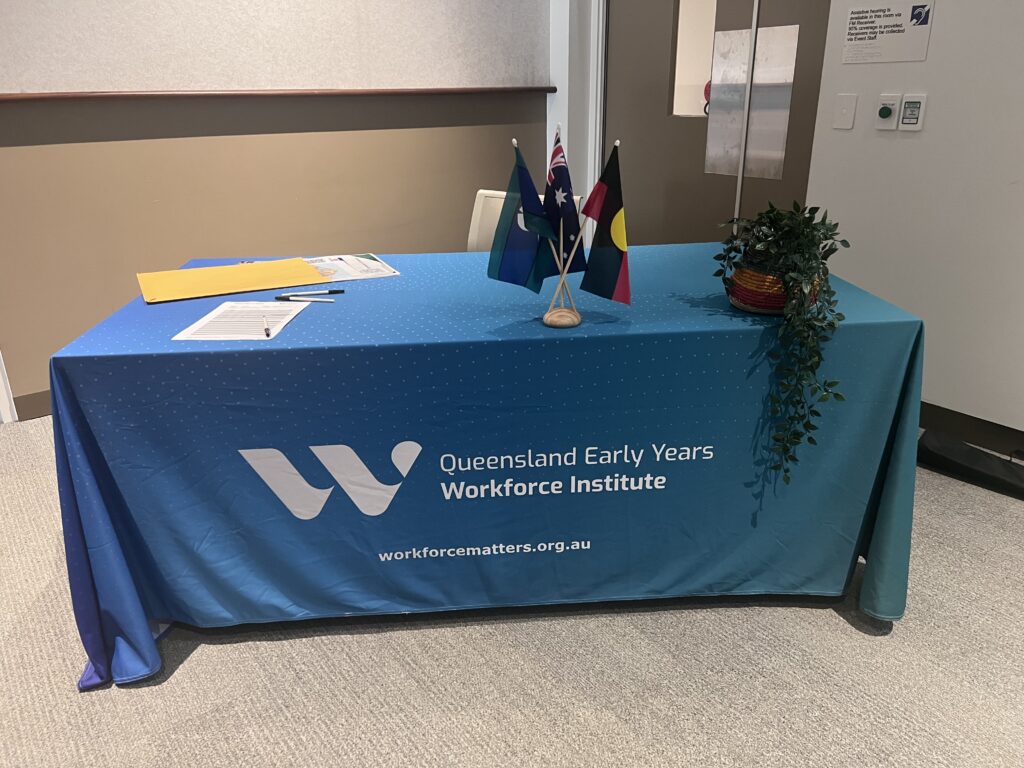
What we are hearing is both familiar and important. The workforce is not short on commitment, ideas or care. Educators and service leaders know their communities deeply. They understand where children’s needs are changing, where families need support, where services are stretched, and where professional learning could make a practical difference. What they are asking for is not more noise, but support that is targeted, useful and grounded in the realities of their work.
Participants have spoken about the pressure of time and capacity. One family day care participant described it as “a real double-edged sword”: regional educators have limited access to professional development unless they travel, but at the same time “our sponges are so full, our cups are so full” that finding the capacity to engage can be hard. Workforce development cannot simply mean offering more opportunities, rather it must consider timing, access, workload and the conditions that make participation possible.
We are also hearing that wellbeing remains central. Participants and regional stakeholders have spoken about educator wellbeing, children’s mental health and wellbeing, and the increasing diversity of children’s needs. When educators are supporting more complex needs, they need time, confidence, mentoring, specialist advice and strong pedagogical support around them. These insights are critical to inform the workforce planning process and identify responses and solutions.
The importance of practical, place-based professional learning has come through strongly. Participants have talked about the value of on-the-floor mentoring, professional conversations, teacher-led action research, induction for newer educators, and support that helps teams reflect, practise and plan what comes next. In Brisbane North, discussion about specialist advice came with an important reminder: multidisciplinary support needs to keep a pedagogical lens, so that it strengthens rather than replaces educators’ professional knowledge.
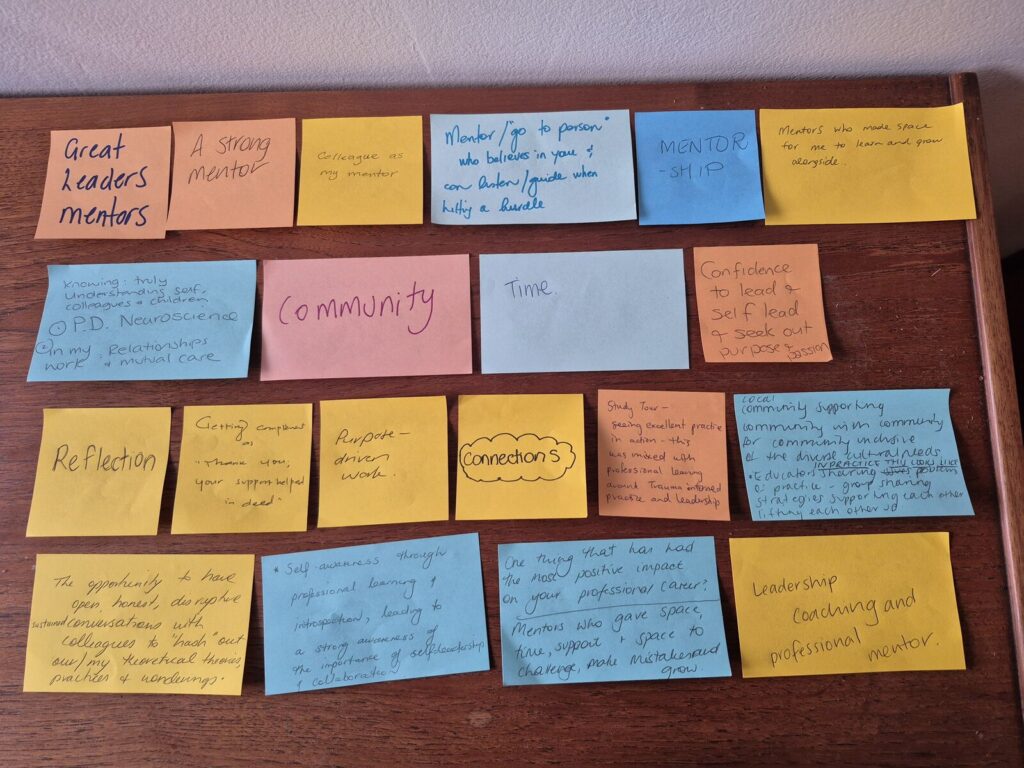
We are also hearing a strong appetite for connection. People want to understand how The Institute will work, how the regional alliances will operate, and how local knowledge will be used. Some participants have asked for more face-to-face opportunities. Others have asked how regional partners can help services engage with the regional data profiles and the broader work of The Institute. That tells us that the workforce does not just want to receive information; it wants to help shape what happens next.
What we are hearing through these introduction sessions is only the beginning. They are part of an ongoing process of listening, testing, clarifying and building trust with the workforce. We know that not every voice has been heard yet, and we know that different parts of the workforce will experience challenges in different ways.
But the message so far is clear: workforce planning must be practical, local and relational. It needs to recognise educator wellbeing, service realities, children’s changing needs, regional access, and the different operating models across the sector. It needs evidence, but also the wisdom of the people doing the work every day.
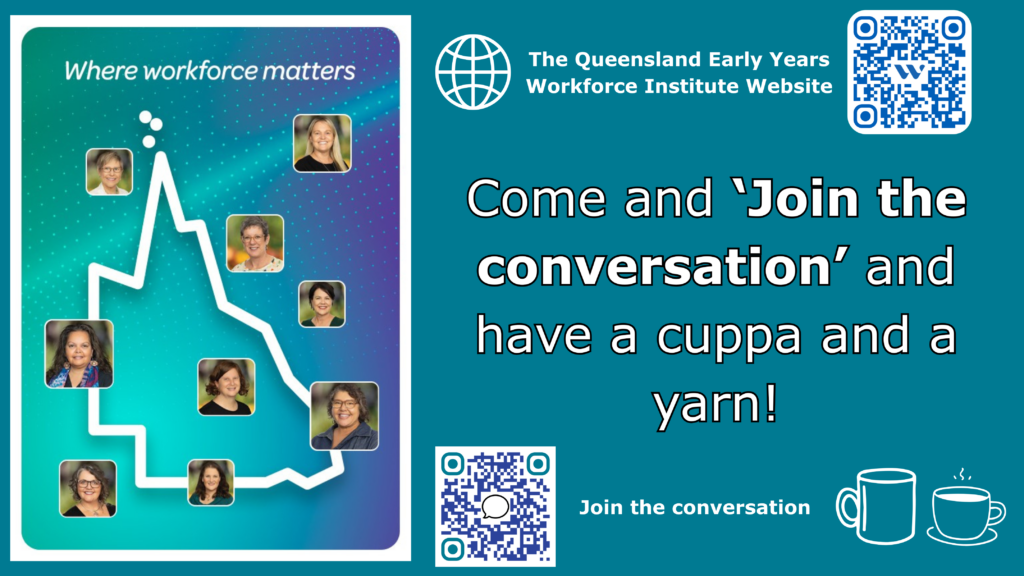
The Institute is listening. The introduction sessions are helping turn data into dialogue, and dialogue into the foundations for action. We invite educators, teachers, service leaders and stakeholders to continue to join the conversation, because Queensland’s education and care workforce will be stronger when it is planned with the workforce, not simply for it.